Best Vacuum Sealers for Garden Harvest: 2026 Buying Guide and Preservation Mastery
Discover the best vacuum sealers for preserving garden harvests, prevent freezer burn, and master professional food packaging techniques.
Disclosure: This post contains affiliate links. As an Amazon Associate, we earn from qualifying purchases at no extra cost to you. We only recommend products we believe are genuinely useful for home food preservation.
Every backyard gardener experiences the sudden arrival of harvest abundance. One week you pick a modest handful of green beans, and the following week your kitchen table disappears under bushels of sweet corn, tender zucchini, heirloom tomatoes, and crisp snap peas. While water bath canning and pressure canning represent time-honored methods for preserving shelf-stable provisions, freezing remains the fastest way to lock in the peak flavor, vibrant color, and cellular nutrition of freshly picked produce.
Freezing garden produce inside ordinary zip-top plastic bags or standard plastic wrap frequently ends in disappointment. Oxygen penetrates thin plastic films within weeks, causing moisture sublimation that turns sweet vegetables into leathery, flavorless casualties coated in icy frost. This destructive process, universally known as freezer burn, destroys months of careful soil preparation, watering, and weeding.
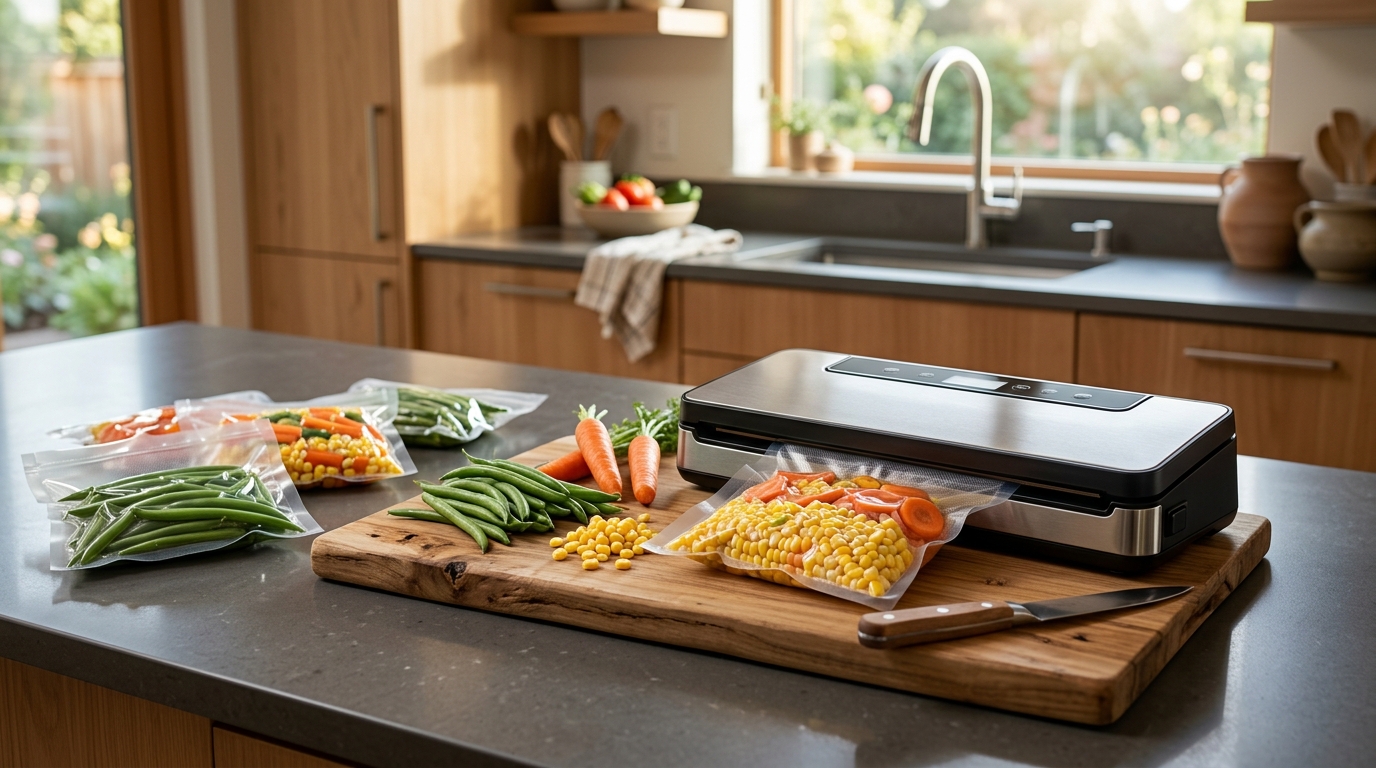
Vacuum sealing solves this fundamental preservation challenge by mechanically extracting atmospheric air and creating an airtight hermetic seal around your food. Removing atmospheric oxygen suppresses oxidation, stops moisture loss, and extends the freezer lifespan of garden vegetables from a few short months to three full years.
Selecting the right vacuum sealer for high-volume harvest preservation requires understanding critical performance metrics that casual shoppers routinely overlook. Processing twenty pounds of blanched garden produce in a single afternoon demands continuous pump stamina, robust thermal sealing bars, dependable liquid management, and bag roll versatility.
This comprehensive guide evaluates the top-performing vacuum sealers available today, examines the critical science of vegetable blanching, explores specialized food safety protocols, and provides step-by-step workflows to ensure your garden bounty tastes farm-fresh all winter long.
The Science of Vacuum Preservation: Why Oxygen Is the Enemy
To understand why vacuum sealing produces such superior results compared to standard freezing containers, one must examine the microscopic interactions between oxygen, moisture, and cellular plant structures.
When you harvest a vegetable from your garden, cellular respiration continues. Enzymes inside the plant tissue remain active, gradually breaking down complex starches into simple sugars, degrading aromatic flavor molecules, and decomposing chlorophyll. Placing unsealed vegetables inside a standard home freezer slows these biochemical reactions, but it does not arrest them completely.
The dry, circulating air inside modern frost-free freezers constantly seeks equilibrium with frozen foods. In standard containers, water molecules migrate outward from the food tissue into the surrounding freezer atmosphere. This dehydration leaves microscopic cavities in the plant cells, creating dry, discolored patches where fats oxidize and flavor compounds volatilize permanently.
Vacuum sealing stops this degradation through three distinct scientific mechanisms:
- Oxygen Depletion: Standard atmospheric air contains approximately twenty-one percent oxygen. By drawing a vacuum of twenty to twenty-four inches of mercury (inHg), high-grade vacuum sealers remove more than ninety-nine percent of available atmospheric oxygen from the pouch. Without gaseous oxygen, chemical oxidation reactions drop to near zero.
- Moisture Migration Elimination: Because the heavy-gauge polymer film conforms tightly to every contour of the vegetable, there is no air headspace into which moisture can evaporate. Ice crystals cannot form on the exterior surface of the food, preventing cellular rupture and freezer burn.
- Thermal Transfer Efficiency: Air acts as an insulator. By removing the air pocket surrounding the food, vacuum-sealed packages freeze up to fifty percent faster than loosely bagged items. Rapid freezing creates tiny micro-crystals rather than large, jagged ice crystals, preserving the crisp cellular walls of tender garden produce upon thawing.
USDA Food Safety Principle: Vacuum packaging food removes oxygen to prevent spoilage and surface dehydration, but it is not a substitute for cold temperature preservation. Perishable garden vegetables, meats, and soft cheeses must always be stored in the refrigerator or freezer immediately after vacuum sealing to inhibit the growth of anaerobic pathogens.
To learn more about foundational pantry and freezer storage guidelines, explore our complete guide on Freezer, Pantry and Shelf-Stable Basics.
The Blanching Mandate: What You Must Do Before Sealing
A widespread mistake among novice preservers is placing freshly picked garden vegetables directly into vacuum bags without thermal pre-treatment. While meats and dry goods can be sealed directly in their raw state, garden vegetables contain active natural enzymes that must be deactivated before freezing.
Enzymes such as catalase, peroxidase, and polyphenol oxidase remain functional even at zero degrees Fahrenheit. If you vacuum seal raw green beans, broccoli florets, or carrots, these enzymes will continue to metabolize inside the bag, resulting in tough textures, off-flavors, and dull, brownish colors within two months.
Furthermore, raw vegetables produce metabolic gases during cellular breakdown. Inside an airtight vacuum bag, this outgassing causes the pouch to expand and balloon, destroying the vacuum environment entirely.
The Two-Phase Blanching Protocol
Blanching is the brief exposure of vegetables to boiling water or hot steam, followed immediately by rapid cooling in ice water. This thermal shock denatures the enzymes without cooking the vegetable through, locking in vibrant natural color, cellular crunch, and nutritional content.
Follow this universal protocol for all garden vegetables before vacuum sealing:
- Preparation: Wash produce thoroughly in clean, cold water. Trim stems, peel outer skins where necessary, and cut vegetables into uniform pieces to ensure equal heat penetration.
- Boiling Water Immersion: Bring one gallon of water per pound of prepared vegetables to a vigorous, rolling boil in a large stockpot. Lower the vegetables into the boiling water using a wire blanching basket. Cover with a tight-fitting lid. Begin timing the exact moment the water returns to a boil.
- The Ice Water Plunge: As soon as the timer sounds, instantly lift the vegetables from the boiling water and submerge them into an ice bath containing equal parts cold water and ice cubes. The cooling time must exactly match the boiling time to halt internal cooking.
- Surface Moisture Removal: Remove the vegetables from the ice bath and spread them across clean lint-free kitchen towels or paper towels. Pat them thoroughly dry. Liquid on the surface of the vegetable will interfere with the heat sealing bar of your vacuum sealer.
- Pre-Freezing (Flash Freezing): Arrange the dry vegetables in a single layer on parchment-lined baking sheets and place them in your freezer for one to two hours until solid. Flash freezing prevents delicate items from being crushed by vacuum pressure and stops internal moisture from being pulled into the vacuum pump.
| Vegetable Variety | Blanching Method | Exact Water Time | Ice Bath Duration | Flash Freeze Required? |
|---|---|---|---|---|
| Snap Green Beans | Boiling Water | 3 Minutes | 3 Minutes | Yes (Highly Recommended) |
| Sweet Corn (Kernels) | Boiling Water | 4 Minutes | 4 Minutes | Yes (Spreads evenly) |
| Sweet Corn (Whole Cob) | Boiling Water | 7 to 11 Minutes | 7 to 11 Minutes | Yes |
| Broccoli Florets | Steam or Boiling | 3 Minutes | 3 Minutes | Mandatory (Fragile heads) |
| Sliced Carrots | Boiling Water | 2 Minutes | 2 Minutes | Optional |
| Zucchini and Summer Squash | Steam Blanching | 2 Minutes | 2 Minutes | Mandatory (High water content) |
| Garden Peas | Boiling Water | 1.5 Minutes | 1.5 Minutes | Yes |
| Asparagus Spears | Boiling Water | 2 to 4 Minutes | 2 to 4 Minutes | Yes |
Detailed Evaluation: The Best Vacuum Sealers for Gardeners
We evaluated dozens of models on the market based on pump suction power, continuous sealing cycles without thermal overheating, liquid containment safeguards, roll storage capability, and long-term durability. The three machines below represent the gold standard for home gardeners.
1. Best Overall for Garden Harvests: FoodSaver V4440 2-in-1 Automatic Vacuum Sealer
FoodSaver V4440 Vacuum Sealer
Best for: Home gardeners and bulk buyers who freeze frequently
- 2-in-1 automatic bag detection
- Dry and moist food modes
- Built-in roll storage and cutter
- Requires proprietary bags
For home growers who preserve dozens of pounds of garden produce each season, the FoodSaver V4440 stands as the most versatile workhorse on the market today. It uniquely integrates a traditional countertop heat-sealing bar with a retractable handheld sealer, allowing you to transition effortlessly between heavy-duty freezer bags and reusable vacuum zipper bags or pantry canisters.
Performance Analysis and Harvest Usability
The core strength of the FoodSaver V4440 lies in its fully automatic bag detection and clamping system. Instead of requiring you to press down firmly with both palms to lock a latch, you simply slide the open edge of the bag into the vacuum channel. Sensitive optical sensors detect the bag, activate the internal motor, clamp the sealing bar down, draw an aggressive vacuum, and apply a wide, secure heat seal automatically.
During extensive garden harvest sessions where you are processing fifty consecutive bags of blanched sweet corn and snap beans, this automated operation dramatically reduces hand and wrist fatigue. The machine features an internal roll storage compartment with a built-in precision sliding cutter, allowing you to custom-tailor bag sizes to the exact volume of your vegetables with zero material waste.
The machine includes dedicated moisture detection sensors. If your garden vegetables contain residual surface water, the V4440 automatically adjusts its sealing time to ensure an unbreakable thermal bond despite the presence of steam or micro-droplets. The pull-out drip tray is generously sized and entirely dishwasher safe, catching stray juices before they can contaminate the internal vacuum motor.
What Makes It Ideal for Gardeners
- Dual Functionality: Seal heavy-duty freezer bags for long-term storage, or use the retractable handheld accessory to vacuum seal dry goods and dehydrated herbs inside Ball mason jars using jar sealing caps.
- Rapid Cycle Times: The heavy-duty piston pump evacuates standard quart-size bags in approximately twelve seconds, keeping your harvest assembly line moving briskly.
- Generous Sealing Width: Accommodates standard eleven-inch rolls and bags, permitting large batches of whole sweet corn cobs or bulky zucchini spears.
2. Best Heavy-Duty for Massive Harvests: NESCO VS-12 Deluxe Vacuum Sealer
NESCO VS-12 Deluxe Vacuum Sealer
Best for: Gardeners sealing large harvests with double heat seals
- Double heat seal for maximum leak prevention
- Double vacuum pump with multiple settings
- Built-in bag cutter and roll storage compartment
- Larger countertop footprint
If your homestead cultivates an expansive vegetable plot spanning thousands of square feet, standard consumer vacuum sealers can struggle with thermal shutdown. When a sealing bar overheats after ten or twelve consecutive bags, standard machines force you to wait several minutes for the heating element to cool down. The NESCO VS-12 Deluxe solves this production bottleneck with superior thermal engineering and commercial-grade components.
Performance Analysis and Harvest Usability
The standout feature of the NESCO VS-12 is its robust Double Vacuum Pump delivering up to twenty-five inches of mercury (inHg) of negative suction pressure. This high-capacity pump extracts air with remarkable velocity, flattening bags tightly around irregular, knobby root vegetables like carrots, parsnips, and beets.
Even more critical for garden preservation is the Double Line Heat Seal. While most consumer machines melt a single thin line across the plastic film, the NESCO VS-12 applies two parallel, heavy-duty seal lines simultaneously. This double seal provides absolute peace of mind against micro-leaks, ensuring that sharp vegetable edges or frozen ice crystals never compromise the package barrier during months of jostling in a chest freezer.
The user control panel offers comprehensive flexibility:
- Variable Pressure Control: Choose between Normal vacuum for dense root vegetables and Gentle vacuum for delicate garden produce like raspberries, blackberries, and blanched broccoli heads.
- Manual Pulse Mode: Gives you complete tactile command over the vacuum pump. You can draw out air incrementally in tiny bursts, stopping the pump the exact split-second before delicate tomatoes or berries begin to compress, followed by immediate manual heat sealing.
- Triple Sealing Modes: Features Dry, Moist, and Double sealing choices to handle anything from dry seeds to juicy blanched greens.
The NESCO VS-12 incorporates a convenient viewing window on the lid, allowing you to visually confirm that the open edge of the pouch is positioned squarely inside the removable vacuum trough before initiating the cycle.
3. Best Budget-Friendly Option: NutriChef Automatic Vacuum Sealer
NutriChef Vacuum Sealer
Best for: Beginners testing whether vacuum sealing fits their routine
- Affordable entry point
- Dry and moist modes
- Compact design
- Less powerful than premium models
- Shorter lifespan with heavy use
Not every gardener needs a bulky, heavy-duty commercial unit. If you cultivate an urban patio garden, manage a few raised garden beds, or seek a lightweight, ultra-compact machine that tucks into a kitchen drawer when not in use, the NutriChef Automatic Vacuum Sealer represents exceptional value.
Performance Analysis and Harvest Usability
Weighing less than three pounds with a sleek, minimalist profile, the NutriChef proves that affordable entry-level appliances can still deliver dependable food preservation. Despite its modest price point, it features digital touch-button controls on the top housing with clear LED indicator lights that display the exact stage of the evacuation and sealing cycle.
The NutriChef offers two primary operational modes:
- Dry Mode: Designed for dry beans, dehydrated apple slices, herbs, and solid flash-frozen produce. It draws a quick vacuum and applies a fast heat seal.
- Moist Mode: Extends the duration of the thermal sealing wire by approximately two seconds, ensuring a solid, leak-free melt even if faint moisture from freshly blanched vegetables touches the sealing zone.
While the NutriChef lacks internal bag roll storage and automatic bag feeding, its manual clam-shell latching mechanism produces a very positive, audible click that confirms the vacuum chamber is locked securely. The sealing bar measures eleven inches across, allowing full compatibility with standard universal vacuum bags and pre-cut pouches.
For gardeners seeking to preserve small batches of garden harvest throughout the summer without spending substantial capital on commercial equipment, the NutriChef delivers consistent, repeatable results that completely eliminate freezer burn.
Essential Accessory Spotlight: The Mason Genie Vacuum Sealer Kit
Mason Genie Vacuum Sealer Kit
Best for: Vacuum-sealing dry goods and leftovers directly in mason jars
- Works with regular and wide-mouth jars
- Electric, compact
- Extends shelf life of dry goods
- Only for jars, not bags
While vacuum-sealing plastic pouches represents the primary method for freezer preservation, home gardeners frequently overlook another remarkable application: vacuum sealing dry harvest crops inside glass mason jars.
The Mason Genie Vacuum Sealer Kit is a dedicated electric handheld appliance that fits directly over standard regular-mouth and wide-mouth mason jar lids. With a single touch of a button, it extracts all ambient air from inside the jar in ten to fifteen seconds, locking the metal canning flat down with an airtight atmospheric seal.
This technique is magnificent for shelf-stable pantry crops that should never be frozen:
- Dehydrated Garden Herbs: Rosemary, oregano, basil, thyme, and mint lose their aromatic essential oils when exposed to ambient oxygen. Vacuum sealing them inside clean glass jars maintains garden-fresh fragrance for over two years.
- Dried Garden Beans and Seeds: Protect heirloom seeds and dried shelling beans from moisture, oxidation, and weevil infestation without chemicals.
- Dehydrated Vegetable Flakes: Vacuum-seal dried tomato powders, onion flakes, and dehydrated soup mixes directly in glass without consuming plastic bags.
Technical Comparison: Evaluating the Top Three Machines
To help you match the right machine to your specific garden volume and kitchen layout, the comparison table below summarizes the key technical specifications and operational capabilities of each vacuum sealer:
| Feature / Specification | FoodSaver V4440 | NESCO VS-12 Deluxe | NutriChef Automatic |
|---|---|---|---|
| Primary Category | Best Overall 2-in-1 | Best Heavy-Duty Harvest | Best Budget / Compact |
| Pump Design | Single High-Volume Piston | Dual Piston Commercial | Single Diaphragm Pump |
| Max Suction Power | ~22 inHg | ~25 inHg | ~18 to 20 inHg |
| Sealing Wire Type | Single Wide Thermal Bar | Double Heat Seal Lines | Single Thermal Bar |
| Bag Feeding Style | Fully Automatic Insertion | Manual Clamshell Latch | Manual Clamshell Latch |
| Roll Storage & Cutter | Internal Built-in | Internal Built-in | None (External storage) |
| Handheld Accessory | Retractable Built-in | Accessory Port & Hose | Accessory Hose Included |
| Pulse Vacuum Feature | No (Auto Sensor) | Yes (Tactile Button) | No |
| Removable Drip Tray | Yes (Dishwasher Safe) | Yes (Dishwasher Safe) | Yes (Hand Wash) |
| Duty Cycle Stamina | 20 to 25 consecutive bags | 40+ consecutive bags | 10 to 12 consecutive bags |
| Best Suited For | Medium to Large Gardens | Large Plots & Homesteads | Small Plots & Patio Beds |
Specialized Vacuum Packaging Strategies for Garden Crops
Different garden vegetables possess unique structural characteristics, moisture levels, and chemical profiles. Applying a uniform, one-size-fits-all sealing technique will often lead to damaged textures or compromised seals. Follow these crop-specific packaging protocols for superior results:
1. Sweet Corn (The Gold Standard of Harvest Freezing)
Sweet corn loses its sweetness rapidly after picking because natural plant enzymes convert sugars into starch within hours. To preserve maximum sweetness:
- Harvest early in the morning while ears are cool.
- Husk and silk the ears immediately.
- For whole cobs: Blanch in boiling water for seven minutes (small ears) up to eleven minutes (large ears). Chill in ice water for the identical duration. Blot dry with towels.
- For kernel corn: Blanch the whole cobs for four minutes, chill thoroughly, and cut the kernels cleanly off the cob at three-quarters depth using a sharp chef knife.
- Flash-freeze the kernels on a baking sheet for two hours. Transfer into an eleven-inch vacuum bag, add your preferred quantity, and seal using the Dry mode on your FoodSaver V4440 or NESCO VS-12. The kernels will pour freely like loose gravel when opened in mid-winter.
2. Snap Green Beans and Wax Beans
Green beans are the most frequently frozen garden vegetable, yet they often suffer from squeaky, rubbery textures when improperly handled:
- Select young, tender pods that snap crisply between your fingers.
- Snip the stem ends and leave whole, or slice into two-inch pieces.
- Blanch in boiling water for exactly three minutes. Cool in ice water for three minutes.
- Ensure pods are thoroughly dry. Pack them horizontally into a vacuum bag to prevent puncturing the bag film.
- Draw a full vacuum and seal. Vacuum-sealed green beans maintain exceptional garden-fresh crunch for twenty-four months.
3. Zucchini, Summer Squash, and Pumpkin Puree
Squash varieties possess an extraordinarily high water content (often exceeding ninety percent water). Drawing a strong vacuum on un-frozen, wet zucchini will pull liquid directly across the sealing bar, resulting in a failed seal and a sticky vacuum pump:
- For sliced zucchini: Steam blanch for two minutes, chill, and drain on towels for twenty minutes. Arrange slices on baking sheets without overlapping, and freeze solid overnight. Once rock-hard, vacuum seal on the Gentle setting.
- For shredded zucchini (baking prep): Shred fresh zucchini, sprinkle lightly with salt, and let drain in a colander for thirty minutes. Squeeze out excess moisture through cheesecloth. Measure exact two-cup portions into vacuum bags. Use the Manual Pulse setting on the NESCO VS-12 to extract air carefully, and seal before moisture reaches the rim.
4. Fresh Garden Berries and Soft Fruits
Strawberries, raspberries, blackberries, and blueberries are structurally fragile. Initiating an automated vacuum cycle on room-temperature berries will instantly crush them into a bag of pureed jam:
- Never wash raspberries or blackberries until immediately before consumption, as moisture fosters mold. For strawberries, rinse quickly in ice water and hull the stems.
- Spread berries in a single layer on parchment-lined metal trays, ensuring individual fruits do not touch.
- Freeze at zero degrees Fahrenheit for at least four hours until completely rigid.
- Transfer the frozen berries into a vacuum bag. Use the Gentle vacuum mode or manual pulse feature to pull air out without applying excessive mechanical pressure on the fruit. Seal securely.
5. Tomatoes: Sauce vs Whole Preservation
While tomatoes are traditionally preserved through water bath canning, vacuum sealing provides an outstanding alternative for households that prefer freezer storage:
- Never attempt to vacuum seal whole fresh tomatoes raw. Their high acidity, high moisture, and delicate skins collapse into unmanageable mush.
- If you lack a canning pot, consult our comprehensive guide on How to Preserve Tomatoes Without a Canner for complete dehydrating and freezing methods.
- For tomato sauces and purees: Simmer your garden tomatoes down into a rich, concentrated marinara or paste. Allow the sauce to cool completely in the refrigerator. Pour measured portions into open vacuum bags, fold the open top over to prevent sauce on the sealing zone, and place the upright bags in your freezer for three hours until frozen solid into flat bricks. Once solid, vacuum seal the bags using standard Dry settings.
Critical Food Safety Rules and Fatal Pitfalls
While vacuum sealing is an extraordinary tool for harvest preservation, it fundamentally alters the environment surrounding your food. Removing atmospheric oxygen creates an anaerobic atmosphere. Understanding how bacteria behave in low-oxygen environments is vital for protecting your family from foodborne illness.
Crucial Food Safety Warning on Botulism: Clostridium botulinum is a spore-forming bacterium present naturally in garden soil. In an anaerobic (zero-oxygen) environment with low acidity and temperatures above thirty-eight degrees Fahrenheit, these dormant spores germinate and produce lethal neurotoxins that are completely invisible, odorless, and tasteless. Never store vacuum-sealed low-acid vegetables at room temperature. They must always remain frozen solid or held below thirty-eight degrees Fahrenheit in a reliable refrigerator.
The Brassica Family Prohibition
You must NEVER vacuum seal raw, unblanched vegetables belonging to the cruciferous or Brassica family. This botanical family includes:
- Cabbage
- Broccoli
- Cauliflower
- Brussels sprouts
- Kale and collard greens
- Radishes and turnips
- Bok choy
These vegetables naturally emit sulfurous gases as part of their living metabolic respiration. Even after harvest, if placed raw into an airtight vacuum bag, these vegetables release gases that inflate the bag like a balloon within days. This gas production ruins the vacuum seal, degrades the vegetable tissue into a foul-smelling slime, and creates an environment where anaerobic bacteria thrive.
The remedy is simple and mandatory: always blanch cruciferous vegetables thoroughly in boiling water for three to four minutes and cool completely before vacuum packaging.
Raw Garlic and Wild Mushroom Restrictions
Never vacuum seal fresh raw garlic cloves, garlic-infused oils, or raw forest mushrooms.
Garlic grows directly in the soil and frequently harbors microscopic Clostridium botulinum spores on its skin. Because garlic is low in acid, sealing raw garlic cloves inside an anaerobic plastic pouch creates the exact conditions required for botulism toxin synthesis if the package ever warms above refrigerator temperatures.
To preserve garden garlic safely:
- Dehydrate garlic cloves until crisp and vacuum seal them in dry glass mason jars using the Mason Genie Vacuum Kit.
- Or mince the garlic, saute lightly in oil until fully cooked through, and freeze in measured ice cube trays before sealing.
If you are interested in exploring traditional heat-based preservation where low-acid foods are made completely shelf-stable without electricity, read our comprehensive testing review on the Best Pressure Canners for Home Canning and our technical breakdown of Water Bath vs Pressure Canning.
Bag Selection and Quality Considerations
A vacuum sealing machine is only as effective as the polymer film bag containing your food. Using substandard, ultra-thin bags purchased from discount retailers frequently causes micro-perforations that break the vacuum seal inside your freezer.
Embossed Micro-Channel Film vs Flat Bags
Standard external suction vacuum sealers (including FoodSaver, NESCO, and NutriChef) cannot use smooth, flat commercial plastic bags. Smooth bags collapse and press together the moment suction begins, closing off the exit path and trapping air bubbles inside the lower half of the bag.
Always choose embossed vacuum bags featuring a diamond-patterned, dotted, or textured interior lining. These raised micro-channels provide a continuous escape pathway, allowing the vacuum pump to evacuate air evenly from the very bottom corners of the pouch up to the sealing bar.
Film Thickness Matters
For delicate items like berries or soft sandwich bread, standard three-mil (0.003 inch) film is sufficient. However, for garden harvest preservation involving rigid bean stems, hard corn cobs, or bone-in freezer meats, always choose heavy-duty four-mil to five-mil multi-layer films. Heavy-gauge films resist puncture from sharp vegetable edges and provide superior moisture barriers against long-term sublimation.
Verify that your bag rolls are explicitly labeled:
- BPA-Free, Phthalate-Free, and FDA Food-Safe compliant.
- Puncture-resistant multi-ply construction (nylon outer layer with polyethylene inner bonding layer).
- Safe for boiling water (essential if you plan to reheat your vegetables using sous-vide techniques directly inside the pouch).
Machine Maintenance and Troubleshooting Guide
To ensure your vacuum sealer operates reliably through heavy autumn harvest seasons year after year, establish a simple routine of preventative maintenance and troubleshooting.
Cleaning and Foam Gasket Care
The most common reason a vacuum sealer stops pulling a strong vacuum is a compressed, hardened, or dirty foam sealing gasket. The oval foam rings that surround the vacuum channel create the airtight perimeter seal required for the pump to draw negative pressure.
- After every harvest processing session, wipe the foam gaskets clean with a damp, warm cloth and mild dish soap. Never saturate the foam with harsh chemical solvents.
- Allow the gaskets to dry thoroughly before storing the appliance.
- Storage Golden Rule: When storing your vacuum sealer in a cabinet, never lock the lid down. Locking the lid clamps the foam gaskets against the opposite housing continuously, permanently crushing the foam and ruining its ability to form a vacuum seal in future seasons. Most modern machines include a dedicated loose storage latch setting specifically designed to prevent gasket compression.
Troubleshooting Weak Vacuum or Failed Seals
- Problem: The pump runs continuously but will not transition to the sealing phase.
- Solution: Check that the open mouth of the bag rests flat inside the center of the vacuum channel without bunching. Inspect the upper and lower foam gaskets for cracks, tears, or food crumbs. If the gasket has flattened permanently, pull it out, flip it upside down, or replace it with an inexpensive replacement gasket kit.
- Problem: The seal melts entirely through the bag, causing it to tear open.
- Solution: The sealing bar has become too hot from excessive back-to-back cycling. Turn the machine off, open the lid, and allow the heating element to cool down for three minutes.
- Problem: The bag loses its vacuum seal several days after being placed in the freezer.
- Solution: This is caused by one of two factors: either an unblanched vegetable is producing metabolic gas, or tiny particles of moisture, grease, or food dust were trapped across the thermal heat seal line during sealing. Always wipe the inside collar of the bag dry before placing it in the sealing chamber, or use a double seal line as provided by the NESCO VS-12.
Frequently Asked Questions About Vacuum Sealing
Can I wash and reuse vacuum sealer bags?
Yes, but with strict safety limitations. Bags that previously held dry goods, bread, crackers, or blanched vegetables can be turned inside out, washed thoroughly in warm soapy water, rinsed, and allowed to air dry completely before reuse. However, bags that have held raw poultry, raw meats, fish, or greasy foods should always be discarded to eliminate the risk of bacterial cross-contamination. Each time you cut off a used seal line, the bag becomes shorter, making smaller bags ideal for herbs and snack portions.
How much longer does food last when vacuum sealed?
On average, vacuum sealing extends the shelf life of frozen garden vegetables by a factor of three to five times. While unsealed or zip-bagged vegetables typically develop noticeable freezer burn and textural breakdown within three to six months, properly blanched and vacuum-sealed vegetables maintain exceptional flavor, color, and cellular integrity for two to three full years in a chest freezer held at zero degrees Fahrenheit.
Can I vacuum seal fresh salad greens and lettuce?
No. Tender leafy greens like lettuce, spinach, arugula, and delicate salad mixes contain fragile cellular structures that will be instantly crushed into a dark, watery mess by the mechanical compression of vacuum packaging. To preserve leafy garden greens, either blanch and freeze them in compact pucks for winter soups and smoothies, or store them unsealed in high-humidity crisper drawers lined with clean towels.
Why did my frozen vacuum bag inflate in the freezer?
If a vacuum bag inflates while frozen solid, it almost certainly indicates that the vegetables were sealed raw without prior heat blanching. Active plant enzymes and natural microorganisms continue metabolic processes, releasing carbon dioxide and nitrogen gases that expand the pouch. Discard any bags that show significant inflation or foul odors upon thawing.
Can I seal liquid soups and stocks with these machines?
External suction vacuum sealers are designed to evacuate air, not liquids. If you attempt to seal liquid chicken stock or fresh tomato juice directly, the suction pump will draw the liquid straight upward into the sealing bar and vacuum motor. To seal liquids with these machines, either pour the soup into bags and freeze them upright in your freezer until solid before vacuum sealing, or use a mason jar with a jar sealer accessory.
Do I need to buy the same brand of bags as my machine?
No. Almost all modern external vacuum sealers are universally compatible with any brand of textured, embossed vacuum rolls and bags, provided they fit within the eleven-inch or twelve-inch width limitation of your sealing bar. You are entirely free to purchase economical universal rolls for your FoodSaver or NESCO appliance.
Is vacuum sealing better than home canning?
Neither method is universally better; they serve complementary roles in a well-balanced home food storage system. Home canning creates completely shelf-stable jars that require zero electricity to store, making them invaluable for emergency preparedness and pantry organization. However, canning exposes vegetables to high temperatures for long durations, altering crisp textures. Vacuum sealing combined with freezing preserves crisp textures, vibrant fresh flavors, and delicate vitamins far better than canning, but relies on a dependable freezer power source.
Can I vacuum seal my garden seeds for next spring?
Yes, vacuum sealing is one of the very best ways to preserve seed viability. Ensure your collected garden seeds are thoroughly air-dried until completely hard and dry. Place the seeds in small envelopes, insert them into a vacuum bag with a food-grade silica gel desiccant packet, and vacuum seal. Stored in a dark, cool cupboard or freezer, vacuum-sealed seeds retain high germination rates for five to ten years.
Final Verdict and Recommendation
Investing in a dependable vacuum sealer transforms your relationship with your garden harvest. Rather than feeling overwhelmed by late-summer gluts or watching tender produce deteriorate into frosty freezer burn, a high-quality vacuum sealer allows you to capture peak summer flavor within minutes of harvest and enjoy it throughout the depths of winter.
For the vast majority of home gardeners, the FoodSaver V4440 2-in-1 Automatic Vacuum Sealer represents the premier balance of automation, speed, and dual-purpose convenience. Its automated bag-clamping mechanism removes hand strain during long harvest sessions, while the integrated retractable handheld accessory enables rapid sealing of dry pantry jars and snack bags without extra clutter.
If your garden harvest spans multiple acres, or if you regularly process massive hauls of sweet corn, garden root vegetables, and freezer meats in marathon sessions, the NESCO VS-12 Deluxe is the undisputed champion of heavy-duty stamina. Its double vacuum pump, tactile pulse control, and unbreakable double heat seal lines offer commercial-tier security at a very reasonable consumer price.
Finally, for apartment growers, patio gardeners, or those working within a modest budget, the NutriChef Automatic Vacuum Sealer delivers all the core preservation benefits of commercial vacuum sealing in an ultra-compact, user-friendly package.
Whichever model you choose, remember that equipment is only half the equation: respect the blanching protocol, cool thoroughly in ice water, keep your sealing channels clean, and enjoy the remarkable satisfaction of serving fresh-from-the-garden sweet corn and snap beans when snow covers your garden beds.
Continue building your resilient home preservation mastery by visiting our Food Preservation Hub for more step-by-step guides, or explore our complete guide on How to Start Canning at Home to expand your pantry storage options.