How to Build a More Resilient Home Food Supply
A practical beginner's framework for preserving food, reducing waste, and making better use of what you already buy or grow.
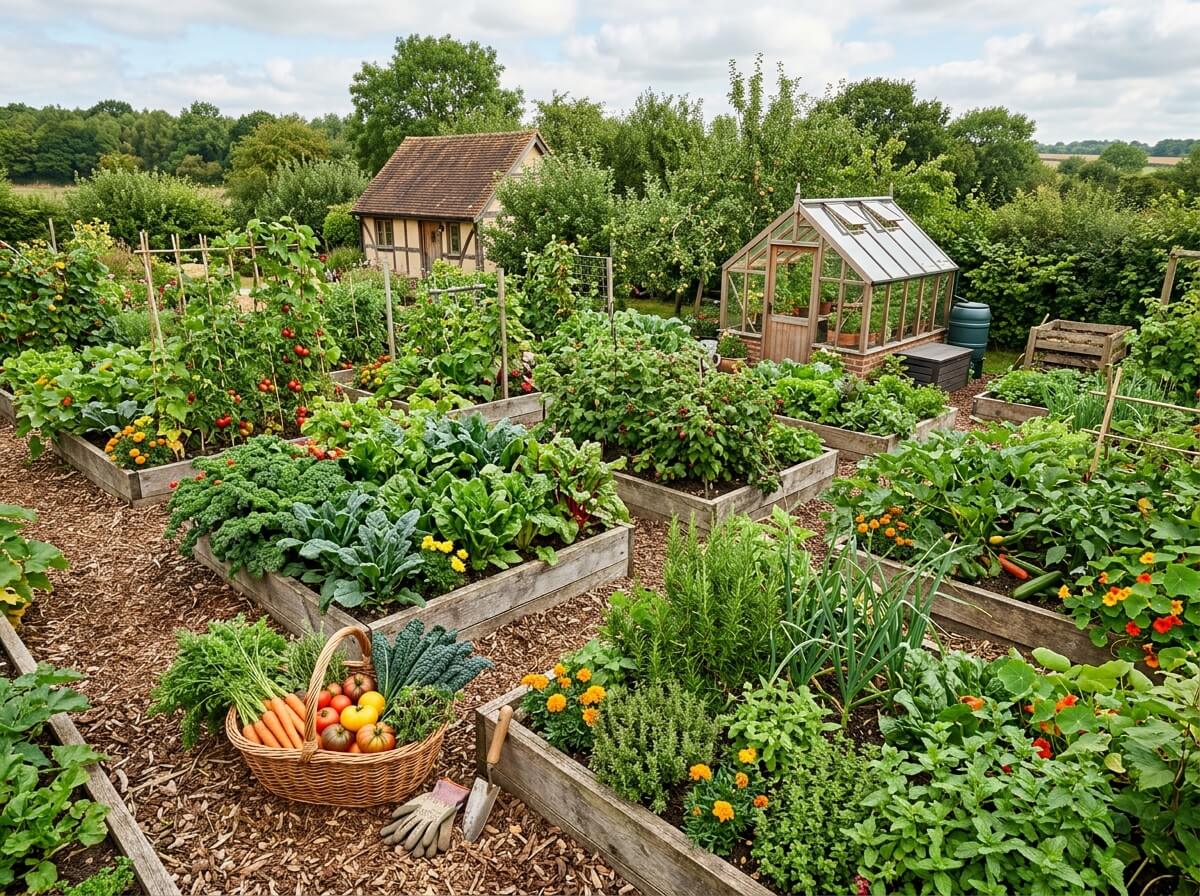
Building a more resilient food supply does not have to start with a pantry packed to the ceiling or a kitchen full of specialized equipment. A better starting point is understanding what your household already eats, what you can store safely, and which preservation methods fit your routine.
Start with food you already use
One of the easiest mistakes in food storage is buying large quantities of foods that look useful on paper but rarely get eaten. Instead, look at the foods your household regularly buys or grows. Those foods give you a realistic foundation for preservation.
Make a short list of staples and divide them into three groups: foods you can store as-is, foods that freeze well, and foods that can be preserved using another method. If you want to learn more about setting up these foundational systems, read our practical guide on freezer, pantry, and shelf-stable basics.
Choose the preservation method around the food
Different foods call for different methods. Freezing can be convenient for many ingredients but depends on reliable freezer space and electricity. Drying can reduce volume and produce lightweight ingredients, while canning can create shelf-stable foods when an appropriate, tested process is followed.
The important point is not to pick one method and force every food into it. Pick the method that matches the ingredient, your available equipment, your storage conditions, and your willingness to do the work consistently.
Build a small system before expanding it
A useful preservation system has three parts: preparation, storage, and rotation. If any one of them is missing, preserved food can become waste rather than a useful resource.
- Preparation: clean, portion, label, and preserve food consistently.
- Storage: keep food under conditions appropriate for that preservation method.
- Rotation: use older items first and replace them as part of normal shopping or harvesting.
Labels are particularly valuable. Include the date and, when useful, the contents or batch information. A simple label can prevent a freezer or pantry from becoming a collection of mystery containers.
Pay attention to your real storage space
Storage capacity is a practical constraint. Before buying equipment or preserving a large harvest, measure the space you actually have. Consider shelf depth, freezer capacity, humidity, temperature, light exposure, and how often the space can be accessed.
This is also where a small notebook or spreadsheet can help. Track what you preserve, how much you have, and how quickly your household uses it. After a few months, you will have better information for deciding what deserves more space.
Buy equipment only when it solves a recurring problem
Affiliate websites often make equipment look like the starting point. In practice, the better order is usually the reverse: identify the recurring task first, then consider whether a tool makes that task easier, faster, safer, or more consistent.
For example, if you repeatedly prepare the same type of food, a dedicated tool may eventually save meaningful time. If you only expect to use it once a year, a simpler approach may make more sense.
Want to explore more preservation ideas?
If you’re interested in going beyond basic freezing, drying, and pantry storage, The Lost SuperFoods is one resource worth exploring. It focuses on lesser-known foods, recipes, and preservation ideas that can complement a broader home food-storage system. Explore The Lost SuperFoods
Keep safety ahead of convenience
Food preservation is one area where convenience should not override safety. Use current, reliable food-safety guidance and follow tested processes for the preservation method you choose. Manufacturer instructions matter too, especially for equipment that uses heat, pressure, electricity, or refrigeration.
A simple first-month plan
If you are starting from scratch, keep the first month deliberately small:
- List 10 foods your household uses frequently.
- Choose two foods that are practical to preserve.
- Select a preservation method appropriate to each food.
- Set aside a small, clearly labeled storage area.
- Record what you preserved and when.
- Use some of the preserved food and note what you would change next time.
The goal is not to create a perfect pantry immediately. The goal is to build a repeatable system that gets better with every harvest, shopping trip, and preservation session.
- Product note: When we link to preservation equipment or other products, those links may be affiliate links. Always check the current product specifications, price, availability, and manufacturer instructions before purchasing or using equipment.