Freezer, Pantry & Shelf-Stable Basics: A Practical Guide to Storing Food Wisely
Learn freezer storage, pantry organization, shelf-stable food basics, labeling, rotation, and safe food handling to minimize waste and keep your kitchen organized.
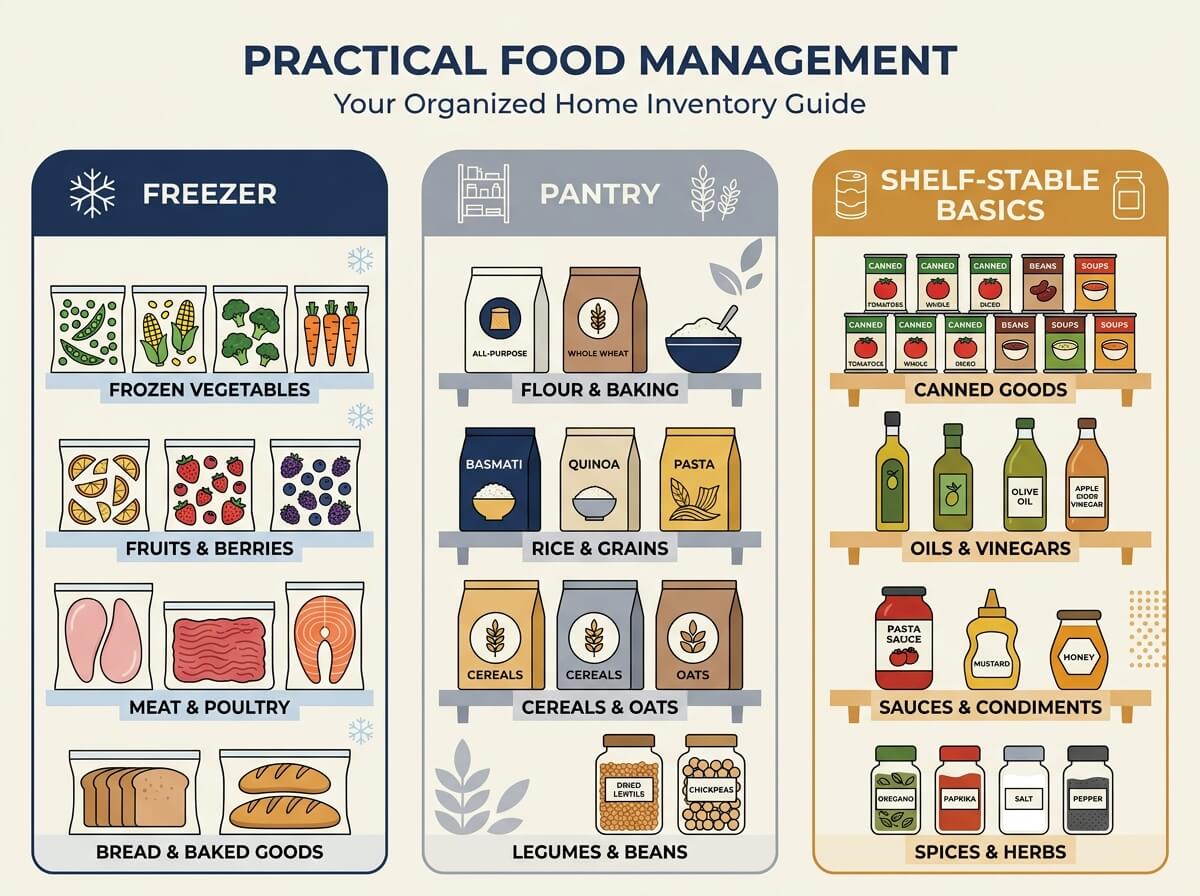
A well-organized freezer and pantry can make everyday cooking easier, reduce food waste, and provide a helpful safety net when schedules get busy or shopping trips are delayed. But stocking food is more than buying in bulk and filling available shelves. Proper storage affects flavor, texture, nutrition, cost, and—most importantly—food safety.
If you are looking to integrate these storage techniques into a broader strategy for self-reliance, check out our guide on how to build a more resilient home food supply.
This guide explains the fundamentals of freezer storage, pantry organization, shelf-stable foods, labeling, rotation, and safe handling. Whether you are setting up your first pantry or improving an established kitchen, these basics can help you build a reliable and practical food system.
What “Shelf-Stable” Means
Shelf-stable foods are products that can be safely stored at room temperature in unopened packaging. They do not require refrigeration until after opening, provided they are stored under appropriate conditions.
Common shelf-stable foods include:
- Canned vegetables, fruits, beans, fish, meat, and soups
- Dried beans, lentils, rice, pasta, and grains
- Shelf-stable milk and plant-based beverages
- Peanut butter and other nut or seed butters
- Oils, vinegar, and many sauces
- Dried herbs and spices
- Crackers, cereal, oats, and baking ingredients
- Shelf-stable tofu and packaged broths
- Commercially dehydrated or freeze-dried foods
Shelf stability depends on processing and packaging. Canning, dehydration, pasteurization, vacuum packaging, and other methods limit microbial growth or protect food from air, moisture, and contamination. Once a package is opened, however, the product may require refrigeration or different handling.
Always follow the manufacturer’s storage instructions. “Shelf-stable” does not mean “indestructible”: excessive heat, moisture, damaged packaging, or improper storage can shorten shelf life or make food unsafe.
Building a Practical Pantry
A useful pantry is not necessarily a large one. It is a collection of foods you regularly eat and can combine into complete meals.
Start With Core Staples
Consider organizing your pantry around several categories.
Grains and starches
- Rice
- Pasta
- Oats
- Quinoa and other whole grains
- Flour and cornmeal
- Crackers and breadcrumbs
- Potatoes or other suitable root vegetables
Protein-rich foods
- Canned or dried beans
- Lentils and split peas
- Canned fish or poultry
- Peanut, almond, or sunflower seed butter
- Shelf-stable tofu
- Textured vegetable protein
- Nuts and seeds
Fruits and vegetables
- Canned tomatoes
- Canned vegetables
- Applesauce and canned fruit
- Dried fruit
- Jarred roasted peppers
- Dehydrated vegetables
- Vegetable juice
Cooking essentials
- Olive, canola, or other cooking oils
- Vinegar
- Salt and pepper
- Sugar or other sweeteners
- Bouillon or stock
- Soy sauce or tamari
- Canned coconut milk
- Baking powder and baking soda
Flavor builders
- Garlic and onion powder
- Dried herbs and spices
- Curry paste or powder
- Mustard
- Salsa
- Hot sauce
- Tomato paste
- Broth and soup bases
The best inventory reflects your household’s dietary needs, cooking habits, available equipment, and budget. A pantry filled with foods nobody enjoys is not a practical pantry.
Store Food in a Cool, Dry, Dark Place
The USDA recommends storing foods in clean, dry locations and keeping them away from excessive heat. Heat and moisture can accelerate quality loss, damage packaging, and encourage mold or pest activity. The Food and Drug Administration also advises consumers to keep storage areas clean and monitor for signs of pests or damaged containers.
Good pantry locations include:
- A dedicated pantry
- A dry basement area
- A kitchen cabinet away from the oven, dishwasher, and sink
- A utility shelf in a temperature-controlled room
Avoid storing food:
- Above the stove
- Next to a radiator or heating vent
- In direct sunlight
- Under a sink where leaks may occur
- In damp garages or outdoor sheds unless conditions are suitable
Use the “First In, First Out” Method
The first-in, first-out system—often abbreviated FIFO—means using older products before newer ones. When unpacking groceries, move older items toward the front and place newer items behind them.
A simple routine:
- Check dates before putting food away.
- Bring older packages forward.
- Place new items behind existing stock.
- Keep similar foods together.
- Inspect the pantry periodically for damage, pests, or expired products.
This approach is especially helpful for canned goods, grains, baking supplies, and condiments.
Understanding Dates on Food Packages
Package dates can be confusing. In the United States, most food date labels are not federal indicators of food safety, with the exception of infant formula. Terms such as “Best if Used By” generally refer to quality rather than safety. “Sell By” dates primarily help retailers manage inventory, while “Use By” may indicate the manufacturer’s recommendation for peak quality.
However, date labels should not be ignored entirely. Consider:
- Whether the package is damaged
- Whether the food was stored correctly
- Whether it has an unusual odor, appearance, or texture
- Whether it is a high-risk product
- Whether the package has been opened
Never taste food to determine whether it is safe. Discard cans that are swollen, leaking, rusted through, severely dented—particularly along seams—or spurting liquid when opened. These may indicate contamination or pressure buildup.
Freezer Basics
Freezing preserves food by slowing chemical reactions and preventing most microorganisms from multiplying. It does not sterilize food, and freezing does not destroy all pathogens. Once food thaws, microorganisms may become active again, so safe handling remains important.
A freezer should be maintained at 0°F (−18°C) or below, according to the USDA.
What Belongs in the Freezer?
Many foods freeze well, including:
- Meat, poultry, and seafood
- Bread and tortillas
- Cooked grains and pasta
- Soups, stews, and casseroles
- Fruits and vegetables
- Shredded cheese
- Butter
- Herbs
- Homemade stocks and sauces
- Prepared meals
Some foods freeze poorly because their texture changes. Examples include:
- Lettuce and other delicate salad greens
- High-water vegetables such as cucumbers
- Mayonnaise-based salads
- Cream sauces, which may separate
- Raw potatoes, which can become watery or grainy
- Soft cheeses, depending on intended use
- Fried foods, which may lose crispness
Foods that freeze poorly may still be suitable for cooking after thawing. For example, frozen tomatoes can work well in sauces even though they are no longer ideal for salads.
Prevent Freezer Burn
Freezer burn occurs when food loses moisture to the cold, dry air inside the freezer. It appears as dry, grayish, or leathery patches. Freezer-burned food is generally not dangerous, but its quality suffers.
Reduce freezer burn by:
- Removing as much air as possible from packaging
- Using freezer-grade bags or containers
- Wrapping foods tightly
- Dividing large quantities into meal-sized portions
- Leaving appropriate headspace in liquid-filled containers
- Avoiding frequent temperature fluctuations
- Labeling packages with the food and freezing date
Vacuum sealing can extend quality, but vacuum-sealed foods still require proper refrigeration or freezing. Vacuum packaging does not make perishable food safe at room temperature.
Choose the Right Containers
Use packaging designed for freezing. Suitable options include:
- Freezer bags
- Rigid plastic containers labeled for freezer use
- Glass containers specifically designed for freezing
- Heavy-duty foil combined with a freezer bag
- Vacuum-sealed bags
Leave room for expansion when freezing liquids. Water-based foods expand as they freeze, so overfilled containers can crack or burst. Narrow-neck glass jars are particularly prone to breaking; use containers intended for freezing and follow their manufacturer’s instructions.
For detailed recommendations on airtight, crack-resistant containers for both freezer and pantry dry storage, read our complete guide to the best reusable food storage containers.
Safe Freezing and Thawing
Safe thawing is just as important as safe freezing. The USDA recommends three safe methods:
- In the refrigerator
- In cold water, changing the water every 30 minutes
- In the microwave, followed by immediate cooking
Food should not be thawed on the kitchen counter. The outer surface can enter the temperature range where bacteria multiply rapidly while the center remains frozen.
The FDA describes the bacterial “danger zone” as approximately 40°F to 140°F (4°C to 60°C). Perishable food should not remain in this range for extended periods.
Food thawed in the refrigerator can generally be refrozen, although quality may decline. Food thawed in cold water or in the microwave should be cooked before refreezing.
Cooling Cooked Food Before Freezing
Large portions of hot food should be divided into shallow containers to cool more quickly. Do not leave cooked food at room temperature for prolonged periods. The USDA advises refrigerating or freezing perishable foods within two hours, or within one hour when the ambient temperature is above 90°F (32°C).
For soups, stews, and casseroles:
- Divide into smaller containers.
- Use shallow containers where practical.
- Allow steam to escape briefly if appropriate, but do not leave food out for long.
- Refrigerate or freeze promptly.
- Label with the name and date.
Freezer Organization
A crowded freezer can waste food because items become difficult to find. Organization improves visibility and helps maintain consistent temperatures.
Try the following system:
- Keep raw meat and seafood together.
- Store prepared meals in a separate section.
- Use bins for vegetables, fruit, and bread.
- Keep frequently used foods near the front.
- Freeze items flat in bags, then stack them vertically once solid.
- Maintain an inventory list on the freezer door.
- Label every package.
When storing raw meat, poultry, or seafood, place items in leakproof packaging or a container. If they thaw or leak, juices can contaminate other food.
Pantry and Freezer Inventory Planning
A food inventory should support real meals rather than simply accumulate supplies. Begin by listing meals your household already enjoys. Then identify ingredients that can serve multiple purposes.
For example:
- Canned tomatoes can become pasta sauce, chili, soup, or shakshuka.
- Beans can be used in tacos, salads, soups, or grain bowls.
- Rice can accompany stir-fries, curries, casseroles, or beans.
- Frozen vegetables can go into soups, fried rice, pasta, and omelets.
- Oats can be used for breakfast, baking, or savory dishes.
- Broth can support soups, grains, sauces, and braises.
A flexible supply might include:
- Several grains or starches
- Two or more protein sources
- A variety of vegetables
- A few flavor-rich sauces
- Baking and cooking basics
- Foods that require little or no preparation
Plan around realistic quantities. Buying large amounts of food that your household cannot use before quality declines can cost more than purchasing smaller quantities regularly.
Food Safety for Canned Goods
Commercially canned foods are generally safe when containers are intact and products are stored properly. Before opening a can, inspect it for:
- Bulging ends
- Leaks
- Severe rust
- Deep dents, especially near seams
- Spurting liquid
- Unusual odor, color, or texture after opening
Do not taste suspicious food. Discard it safely.
Home canning requires special care. Low-acid foods—such as vegetables, meats, poultry, and seafood—must be pressure-canned using tested procedures because they can support the growth of Clostridium botulinum. Water-bath canning is appropriate only for foods with sufficient acidity and tested recipes. The National Center for Home Food Preservation provides research-based guidance for home canning methods and recipes.
Never improvise canning times, temperatures, or ingredient proportions. Use tested recipes from reliable sources.
Managing Opened Shelf-Stable Foods
Shelf-stable products often become perishable once opened.
Examples include:
- Refrigerate opened canned vegetables and transfer them to a clean container.
- Refrigerate opened broth unless the package specifically permits room-temperature storage.
- Store opened nut butter according to the label.
- Refrigerate opened shelf-stable milk or plant-based milk.
- Keep opened tomato paste refrigerated, or freeze it in tablespoon-sized portions.
- Store opened dried foods in airtight containers if moisture or pests are a concern.
Use clean utensils and avoid returning leftovers to their original package. Record the opening date for products that are easy to forget.
Choosing Airtight Storage Containers
Airtight containers help protect dry foods from moisture, odors, and insects. They are useful for:
- Flour
- Sugar
- Rice
- Pasta
- Cereal
- Dried beans
- Pet food
- Nuts and seeds
- Baking ingredients
Choose containers that are food-safe, durable, and easy to clean. Transparent containers make it easier to monitor supplies, while labels prevent confusion between similar ingredients.
For bulk purchases, do not automatically combine a new supply with an older one. Empty and clean the container first, then refill it. This prevents older food from remaining hidden at the bottom.
Reducing Food Waste
Good storage is an important waste-reduction strategy. The Environmental Protection Agency identifies preventing food waste as preferable to recycling or disposal because it conserves the resources used to produce, transport, and prepare food.
Practical ways to reduce waste include:
- Freeze food before it reaches the end of its useful quality.
- Buy quantities your household can realistically use.
- Save vegetable scraps for stock when safe and appropriate.
- Use bruised fruit in smoothies or baking.
- Turn leftover grains into fried rice or grain salads.
- Repurpose cooked vegetables in soups, omelets, or casseroles.
- Keep a “use first” box in the refrigerator.
- Check the freezer before shopping.
- Label leftovers clearly.
Food waste prevention does not require perfection. Small improvements in visibility, planning, and storage can make a significant difference over time.
Creating a Balanced Emergency Supply
A small emergency food supply can be useful during storms, power outages, illness, or unexpected financial strain. Choose foods that your household already knows how to prepare and eat.
Consider including:
- Ready-to-eat canned foods
- Manual can opener
- Shelf-stable protein
- Crackers, oats, rice, and pasta
- Canned or dried fruit
- Canned vegetables
- Soups and stews
- Shelf-stable milk
- Water
- Baby food, medical-diet items, or pet food as needed
- A camping stove or other safe backup cooking method, where appropriate
Remember that emergency food planning also requires sanitation, water, fuel, lighting, and a way to prepare food safely. Do not rely exclusively on foods that require refrigeration or extensive cooking.
A Simple Monthly Storage Routine
A short monthly check can keep your pantry and freezer manageable.
Pantry checklist
- Look for damaged or leaking packages.
- Check for signs of insects or rodents.
- Wipe shelves and clean spills.
- Move older items forward.
- Review products approaching their quality dates.
- Update your shopping list.
Freezer checklist
- Confirm the freezer is maintaining 0°F (−18°C) or below.
- Check for freezer-burned or unidentified packages.
- Group similar foods.
- Remove items that are no longer usable.
- Update the inventory.
- Keep the door closed as much as possible during power interruptions.
Conclusion
A dependable food-storage system combines safe temperatures, suitable packaging, thoughtful organization, and realistic planning. Pantry staples provide flexibility, frozen foods preserve ingredients and meals, and shelf-stable products offer convenience when fresh options are limited.
The most effective approach is simple: store food in cool, dry conditions; freeze items properly; label everything; rotate older products forward; inspect packages; and follow tested food-safety guidance. With these habits, your pantry and freezer can become more than storage spaces—they can serve as practical tools for saving money, reducing waste, and making everyday meals easier.